Oral GLP-1 vs Injection: Do the Tablets Actually Work?
A daily tablet now reaches weight loss numbers that sit alongside weekly injections. The trade-off is not effectiveness, it is the timing rules.
Medically reviewed by a US-licensed, board-certified medical provider
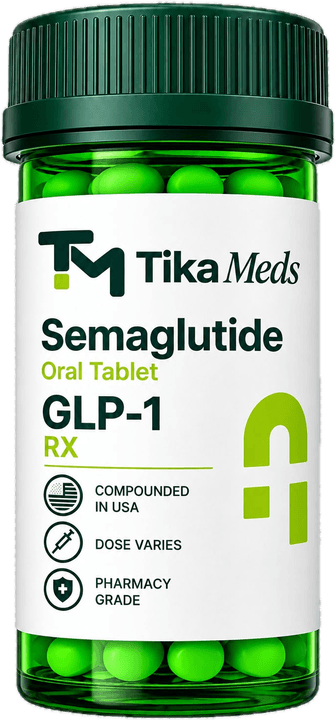
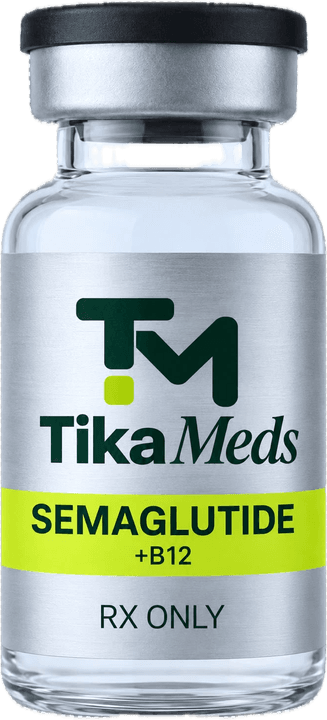
The short answer: yes, oral GLP-1 medication works. In the OASIS 4 trial, oral semaglutide at 25 mg produced 16.6% average weight loss over 64 weeks among participants who took it as directed, against 2.7% on placebo. That sits comfortably in the same range as weekly semaglutide injections. The real trade-off is not potency, it is discipline: tablets have strict timing rules, and injections do not.
Why an oral version took so long
Semaglutide is a peptide, which is to say a small protein. Swallowing a protein normally means digesting it, and a digested drug does nothing. That is why this entire class of medication started as injections: the needle bypasses the problem completely.
The oral version solves it by pairing the peptide with an absorption enhancer that protects it briefly in the stomach and helps it cross into the bloodstream. It works, but the window is narrow, and that is where the rules come from.
The rules that make a tablet work
Absorption of oral semaglutide is highly sensitive to what else is in your stomach. Follow the exact instructions your provider and pharmacy give you, which generally look like this:
- 1Take it first thing in the morning, on a genuinely empty stomach.
- 2Swallow it with a small sip of plain water. Not coffee, not juice, not a large glass.
- 3Wait at least 30 minutes before eating, drinking anything else, or taking other oral medication.
- 4Take it every day. A weekly injection forgives a late dose far more than a daily tablet does.
That 16.6% figure from the trial specifically reflects participants who took the medication as directed. Taken with breakfast, or chased with coffee, a tablet simply delivers less drug. This is the single most important thing to understand before choosing the oral route.
Side by side
| Daily tablet | Weekly injection | |
|---|---|---|
| How often | Every day | Once a week |
| Needles | None | A very fine needle, a few seconds |
| Timing rules | Strict: empty stomach, plain water, wait 30 minutes | None, take it any time of day, with or without food |
| Doses to remember per month | About 30 | About 4 |
| Trial weight loss | 16.6% over 64 weeks (oral semaglutide 25 mg) | 13.7% to 20.2% over 72 weeks, depending on molecule |
| Side effect profile | Same digestive family | Same digestive family |
| Cold storage | Not required | Usually refrigerated |
| Best for | Needle aversion, travel without a cooler, a reliable morning routine | Fewest doses to remember, the strongest available options |
Do side effects differ?
They come from the same mechanism, so they look the same: nausea, reflux, constipation, and diarrhea, concentrated early and around dose increases. In OASIS 4, 74% of participants on the tablet reported a digestive side effect against 42% on placebo, which is in line with what the injectable trials found. Most were mild to moderate and passed.
One practical difference: a daily tablet spreads its effect more evenly across the week, where a weekly injection concentrates the roughest patch into the day or two after your shot. Some people much prefer the steadier version, and some prefer knowing exactly which day will be unpleasant. Our full guide to GLP-1 side effects covers the management side either way.
Where the prefilled pen fits
There is a middle option that gets overlooked. A prefilled pen is still a weekly injection, but there is no vial and no syringe and nothing to draw up or measure. You dial your dose and press. For a lot of people, what feels intimidating about injections is the preparation rather than the needle, and the pen removes exactly that part. See the Semaglutide Pen and the Tirzepatide Pen.
Choosing between them
- Choose the tablet if needles are a genuine barrier for you, if you travel often and would rather not manage cold storage, and if you already have a dependable morning routine to attach it to.
- Choose the injection if you would rather think about your medication four times a month than thirty, if mornings in your household are chaotic, or if you want tirzepatide at full strength.
- Choose the pen if the injection math is appealing but preparing a dose is what puts you off.
None of these is permanent. Format and dose are both adjustable, and switching is routine if the one you picked does not fit your life. Compare all six on the treatments page, or start the 2-minute eligibility quiz and a US-licensed provider will review your history and recommend a fit.
Common questions
Is oral semaglutide as effective as the injection?+
In trials it is close. Oral semaglutide at 25 mg produced 16.6% average weight loss over 64 weeks in OASIS 4 among participants taking it as directed, which sits alongside the 13.7% to 15% typically reported for weekly semaglutide injections. Effectiveness depends heavily on following the empty-stomach timing rules.
How do I take an oral GLP-1 tablet correctly?+
Take it first thing in the morning on an empty stomach with a small sip of plain water, then wait at least 30 minutes before eating, drinking anything else, or taking other oral medication. Follow the exact instructions your provider and pharmacy give you, since food and other liquids sharply reduce how much of the drug is absorbed.
Do tablets have fewer side effects than injections?+
No. They share the same digestive side effects because they work the same way. In OASIS 4, 74% of participants on the tablet reported a digestive side effect compared with 42% on placebo, similar to the injectable trials. A daily tablet does tend to spread the effect more evenly across the week rather than concentrating it after a weekly shot.
Can I switch from tablets to injections, or back?+
Yes, and it is common. Your provider restarts you at an appropriate dose for the new format rather than matching strength directly, so your body adjusts gradually. Do not switch formats or stack medications on your own.
Is there an oral version of tirzepatide?+
We offer a daily oral tirzepatide tablet alongside the oral semaglutide. As with any compounded medication, it is not FDA approved, and a licensed provider decides whether it is appropriate for you.
Sources
- 1.Garvey WT et al. Oral Semaglutide at a Dose of 25 mg in Adults with Overweight or Obesity. New England Journal of Medicine, 2025 (OASIS 4)
- 2.American College of Cardiology. OASIS 4: Significant Weight Loss With Oral Semaglutide Comparable With High-Dose Subcutaneous Versions
- 3.Aronne LJ et al. Tirzepatide as Compared with Semaglutide for the Treatment of Obesity. New England Journal of Medicine, 2025 (SURMOUNT-5)
This article is general health information, not medical advice, and does not create a provider-patient relationship. Compounded medications are prepared by state-licensed, FDA-regulated pharmacies. Compounded drugs are not FDA-approved and have not been evaluated by the FDA for safety, effectiveness, or quality. A prescription is required and is issued only if a licensed provider determines treatment is appropriate for you. Results vary by individual.
See if you qualify
Answer a few questions and a US-licensed, board-certified provider reviews your health history. There is no charge unless you are prescribed.
Keep reading
Semaglutide vs Tirzepatide: Which GLP-1 Is Right for You?
One targets a single hunger hormone, the other targets two. The first head-to-head trial finally settled how much that difference is worth.

GLP-1 Side Effects: What to Expect, and How to Get Ahead of Them
Most GLP-1 side effects are digestive, front-loaded into the first weeks, and largely manageable. Here is the timeline and the fixes that work.